
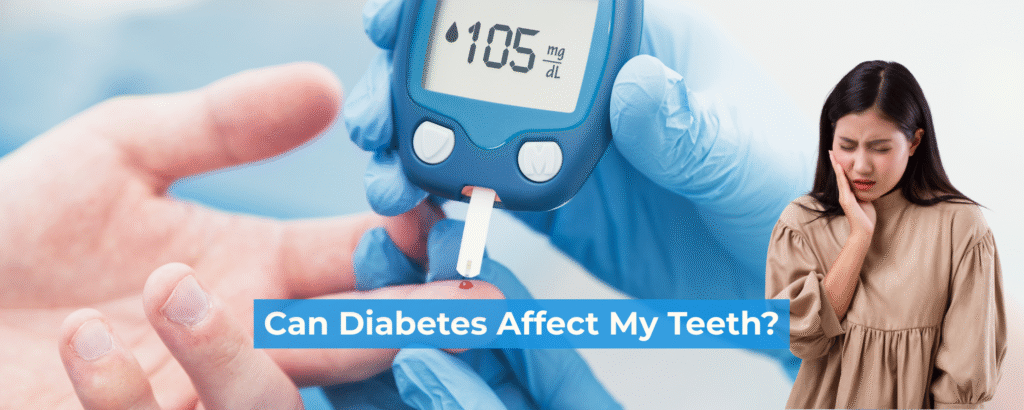
Can Diabetes Affect My Teeth?
If you have diabetes, you know how important it is to manage your blood sugar, watch your diet, and stay active. But did you know that your oral health is just as critical to your overall well-being? The relationship between diabetes and your teeth and gums is a powerful two-way street. Poorly managed diabetes can significantly impact your oral health, and in return, poor oral health can make it even harder to control your blood sugar levels.
The Two-Way Connection
Understanding this link is the first step to protecting your smile. Here’s a look at how diabetes affects your mouth:
- High Blood Sugar Fuels Bacteria: High blood glucose levels in your body lead to higher glucose levels in your saliva. This sugary saliva is the perfect breeding ground for the harmful bacteria that cause tooth decay and cavities. The more sugar available, the faster these bacteria can multiply and produce the acids that erode your tooth enamel.
- Impaired Immune System: Uncontrolled diabetes can weaken your body’s ability to fight off infections. This makes you more susceptible to bacteria and inflammation, especially in your gums. What might be a minor gum irritation for someone without diabetes can quickly escalate into a serious infection for someone with the condition.
- Reduced Blood Flow: Over time, diabetes can lead to changes in blood vessels. This can reduce blood flow to your gums, weakening the tissue and making it more vulnerable to infection. It also slows down the healing process, so if your gums get injured or infected, they will take much longer to recover.
Common Oral Health Problems to Watch For
Due to these factors, people with diabetes are at a much higher risk for specific oral health issues:
- Gum Disease (Periodontitis): This is the most common dental complication of diabetes. It starts with inflammation of the gums (gingivitis) and can progress to periodontitis, which can destroy the bone supporting your teeth. Symptoms include red, swollen, or bleeding gums, bad breath, and loose teeth.
- Dry Mouth (Xerostomia): Diabetes can reduce saliva flow, leading to a dry mouth. Saliva plays a vital role in washing away food particles and neutralizing acids. Without it, you are at a much greater risk for cavities, gum disease, and fungal infections.
- Thrush (Oral Candidiasis): This is a fungal infection that appears as white or red patches in your mouth. High sugar levels in your saliva and a weakened immune system make you more prone to this infection.
How to Protect Your Teeth
The good news is that by taking proactive steps, you can keep your mouth healthy and help manage your diabetes more effectively.
- Maintain Excellent Blood Sugar Control: This is the single most important step. Keeping your blood sugar within a healthy range will minimize the risk factors for all dental complications.
- Practice Consistent Oral Hygiene: Brush your teeth at least twice a day with a fluoride toothpaste and floss daily. This removes the plaque and food particles that feed bacteria.
- Visit Your Dentist Regularly: Inform your dentist about your diabetes diagnosis. They can provide specialized care, monitor you for early signs of problems, and offer advice.
- Stay Hydrated: Drinking plenty of water helps combat dry mouth and washes away sugar and food debris.
By making your oral health a priority, you’ll not only protect your teeth and gums but also take a significant step towards better overall health.