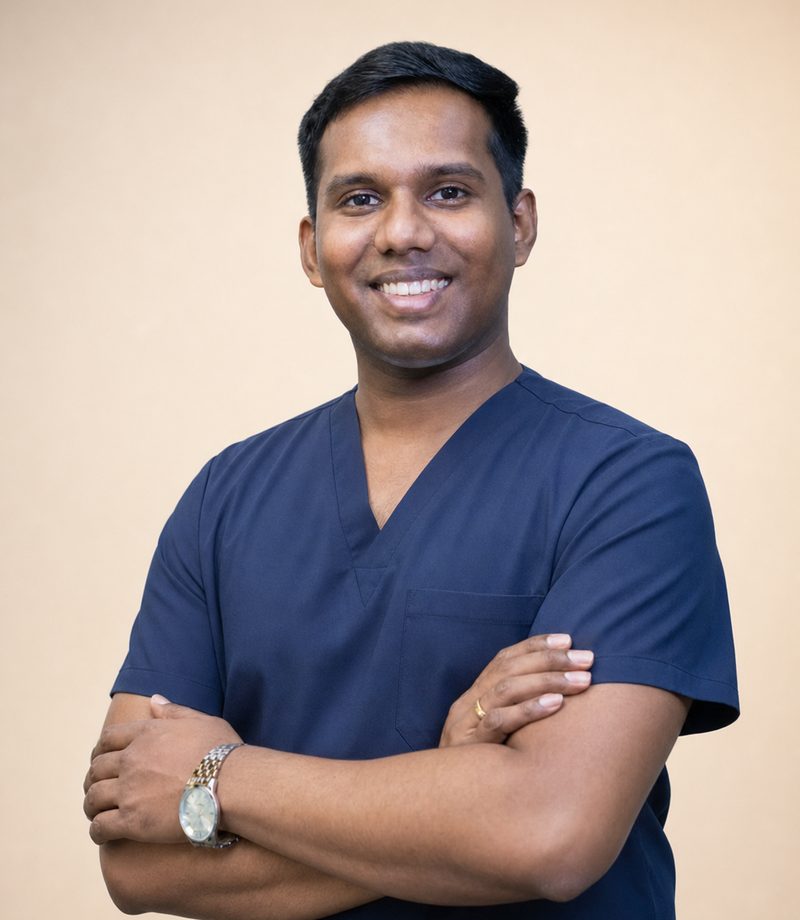
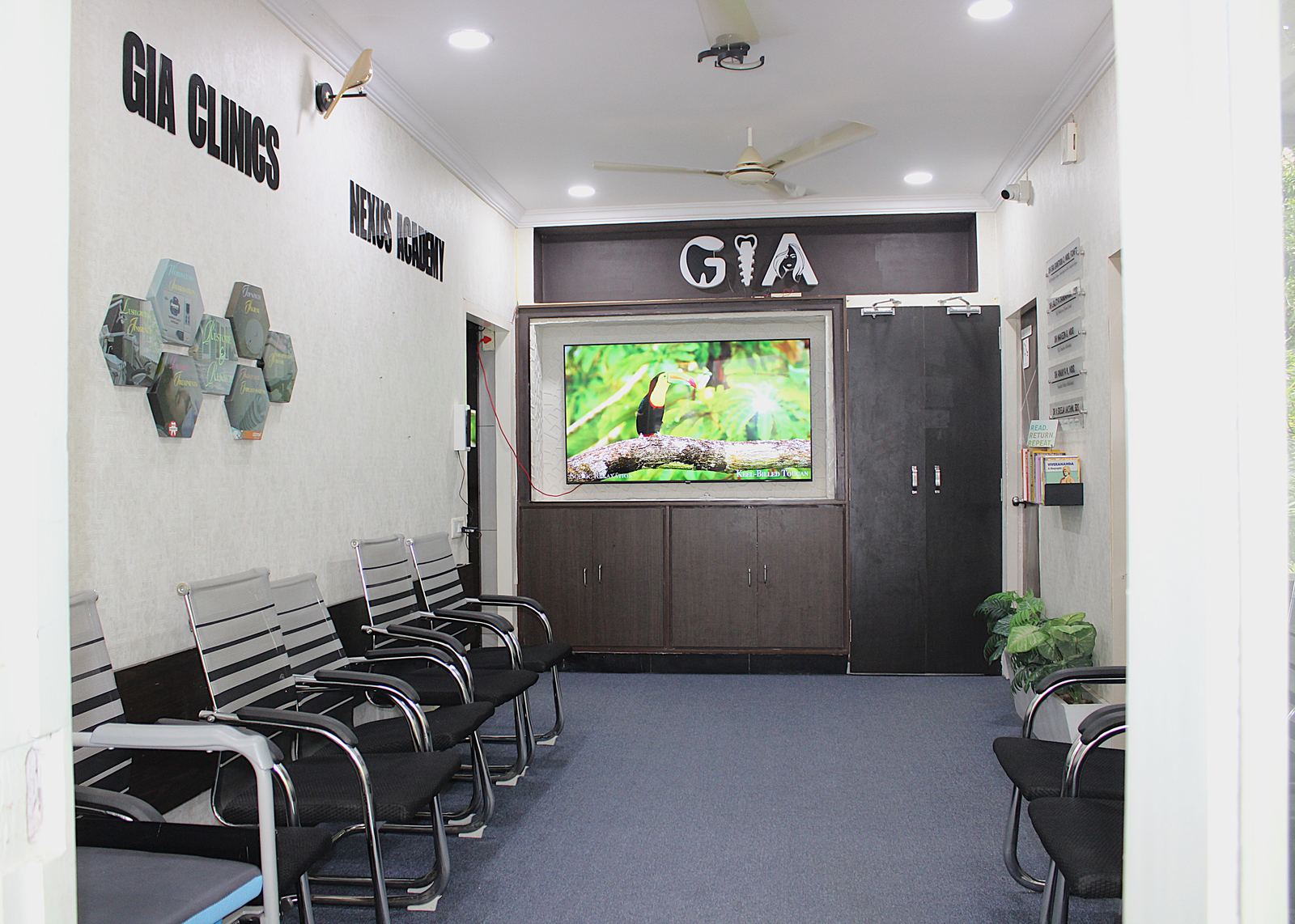
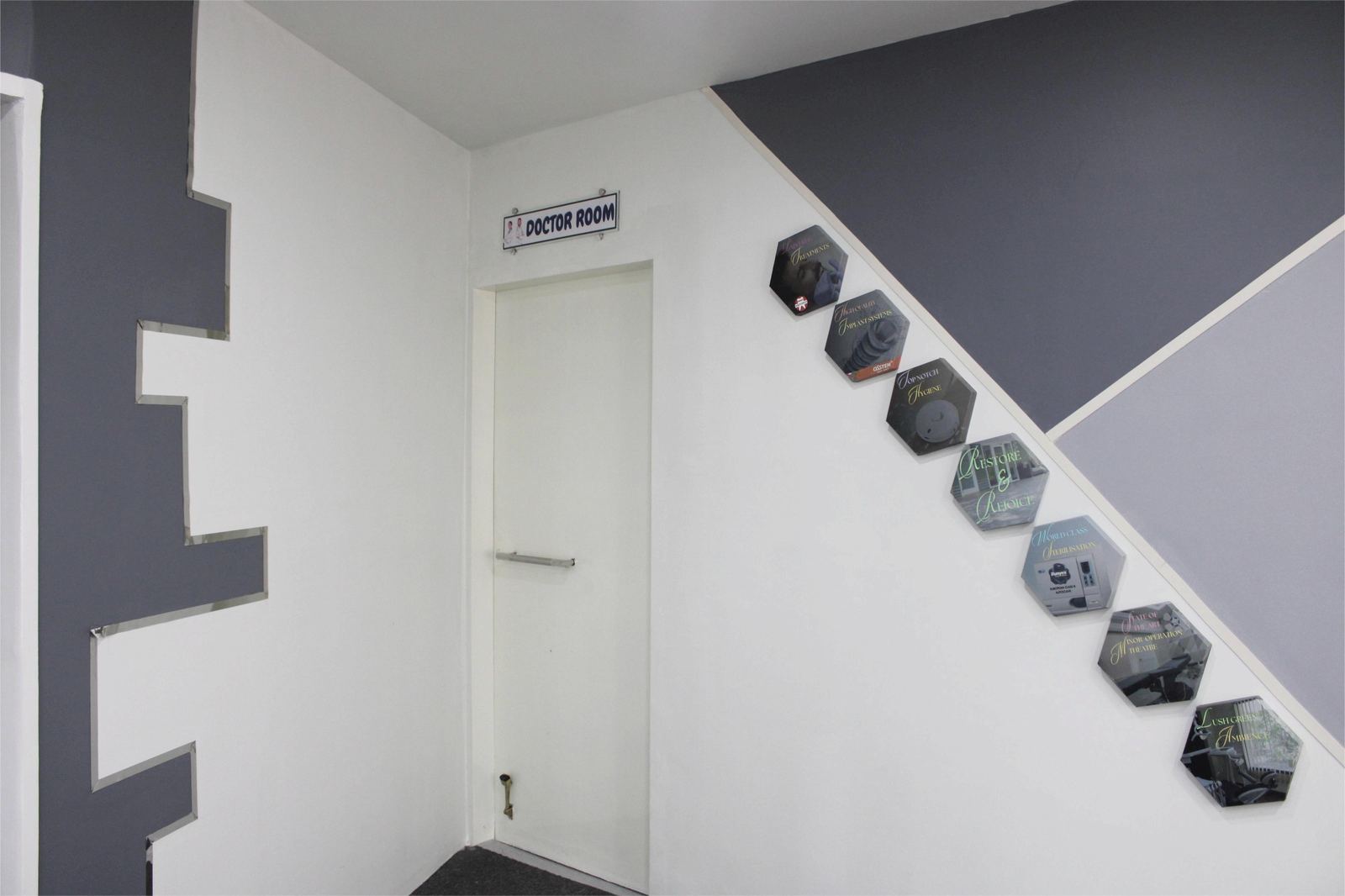
Oral surgery covers procedures in the mouth and jaws, such as difficult extractions, biopsies, frenectomy, removal of cysts and treatment of jaw injuries. At GIA Clinics in Vijayawada, it is done by Dr Sai Santosh, our oral and cranio-maxillofacial surgeon, in the minor operation theatre at both our Gunadala and Gurunanak Colony clinics.

Your first visit answers this properly, with an examination and, where needed, a scan, before you commit to anything.
Dr Sai examines the area and takes an OPG or other X-ray to plan the procedure.
Visit 1He explains what will be done, the recovery and any risks, and answers your questions before you agree.
Visit 1Under local anaesthesia, the procedure is done in our minor operation theatre with sterilised instruments.
Visit 2You go home with written instructions on bleeding, swelling, eating and medicines.
Same dayWe check healing, remove stitches if needed and go through any biopsy report with you.
About 1 week later
Chief Oral & Cranio-Maxillofacial Surgeon, 14 years of practice. At both GIA clinics, 12:30 PM to 8:30 PM.
"Had surgery for my sister's wisdom tooth removal... the tooth was in a very complicated place within the jaw. Dr. Santosh garu had been very patient and precise on surgery. The whole process was painless and post operation there was minimal swelling and pain."
"Inside the ambience is spick and span... the surgical theaters are par excellence. The team of dentists with varied skills and specialisations cater to the varied needs of the patients."
★ 5.0 · 874 reviews
★ 5.0 · 374 reviewsAnswers to be checked by the doctor
They are dental surgeons with specialist training in surgery of the mouth, jaws and face, from difficult extractions to jaw injuries.
Most oral surgery is done under local anaesthesia, so you are awake but the area is numb. Larger procedures may be planned in a hospital.
A biopsy takes a small piece of tissue to find out what a lump, patch or ulcer is. Most are not serious, but testing gives a clear answer.
Most people feel better within a few days. Swelling usually peaks around day two or three and then eases.